
 English
 简体中文


What Does Sunka Lead Manufacture?
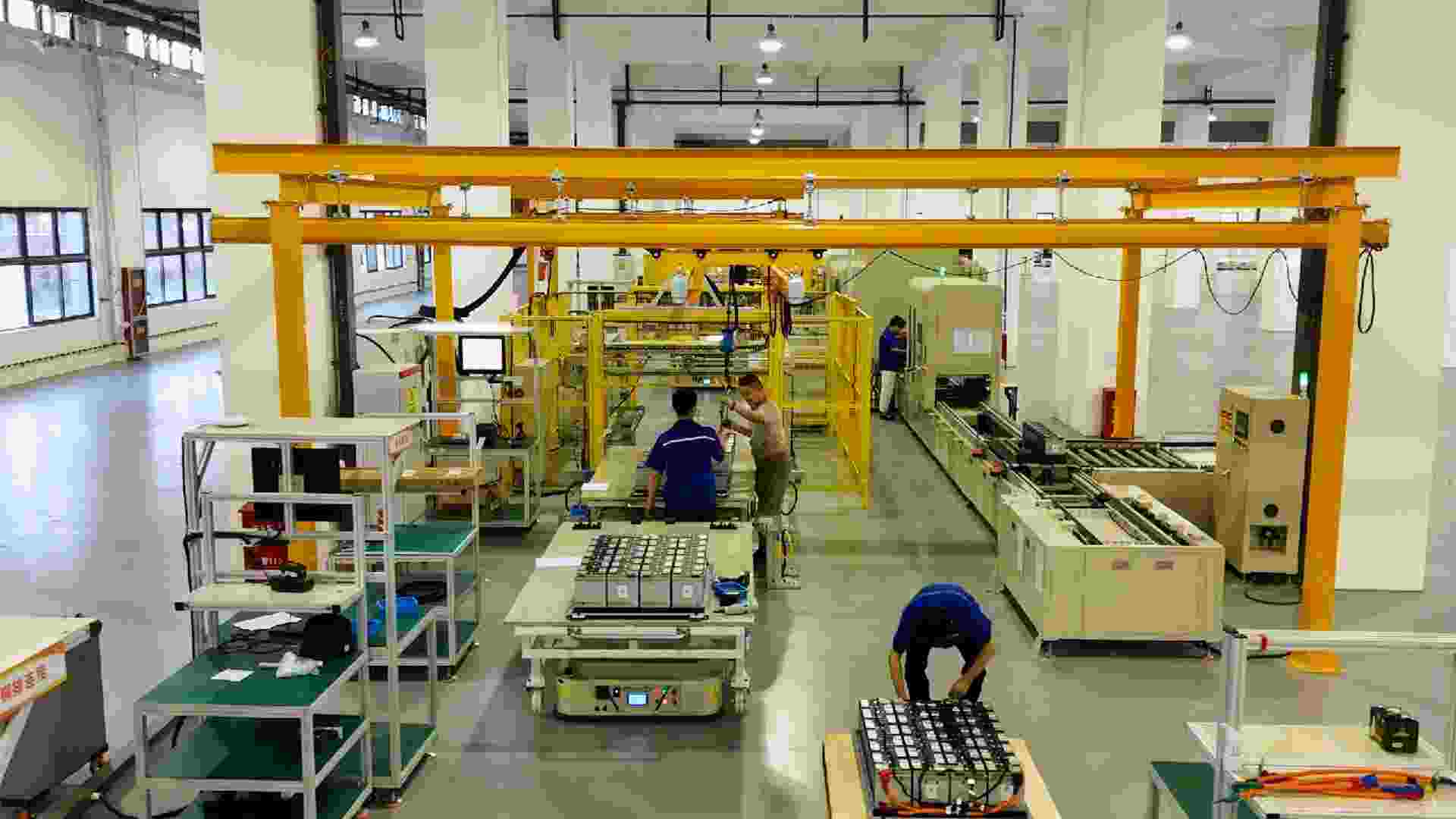
Sunka Lead is a Chinese manufacturer and system integrator specializing in lithium battery module and PACK production equipment. Its solutions include standalone manufacturing equipment, semi-automatic assembly lines, and automated module and PACK production systems.
The company focuses on manufacturing equipment rather than the production of battery cells or finished battery PACKs.
Its production line solutions serve battery manufacturers working in residential energy storage, commercial and industrial energy storage, and other lithium battery applications.
Equipment configurations are developed according to cell format, battery module structure, PACK design, required manufacturing processes, target production capacity, and available factory space.
1. What Types of Battery PACK Production Lines Does Sunka Lead Offer?
Sunka Lead provides different levels of battery module and PACK manufacturing automation.
Semi-Automatic Battery Module and PACK Production Lines
Semi-automatic production lines combine manual operations with automated manufacturing equipment.
Depending on the process design, operators may handle material loading, component installation, module transfer, and selected assembly tasks.
Quality-critical processes can be supported by automated stations such as OCV testing, module compression, laser welding, insulation testing, and PACK inspection.
This approach is relevant to manufacturers that require production flexibility, handle multiple battery products, or do not need extensive automation at every workstation.
Automated Energy Storage Battery PACK Production Lines
Automated production lines integrate a greater number of manufacturing operations into a coordinated system.
Depending on the project, the production process may include automatic cell feeding, barcode identification, electrical testing, module stacking, compression, laser cleaning, laser welding, material transfer, PACK assembly, and inspection.
Different automation configurations are available to match the required production process and manufacturing capacity.
The term "fully automatic" should be interpreted according to the actual workstation scope, since some operations may still require operators.
Standalone Battery Manufacturing Equipment
Not every manufacturer needs a complete production line.
Standalone equipment may be suitable for facilities upgrading an existing manufacturing process or adding a specific inspection or assembly capability.
Examples include cell testing and sorting equipment, module compression equipment, laser welding machines, and battery testing stations.
Standalone equipment can be evaluated independently, while line integration requires additional assessment of material flow, equipment communication, and overall process capacity.
2. Which Battery Cell Formats Can Sunka Lead Support?
Sunka Lead's product portfolio includes manufacturing equipment for selected prismatic, cylindrical, and pouch battery applications.
However, the handling and assembly requirements vary significantly between cell formats.
Prismatic Battery Module and PACK Production
Prismatic lithium iron phosphate (LFP) cells are commonly used in energy storage battery systems.
Compared with cylindrical cells, prismatic cells typically require manufacturing processes designed around larger individual cells, terminal positioning, controlled module compression, and busbar or CCS connections.
Sunka Lead's prismatic energy storage production solutions may include:
Battery cell loading and identification
OCV and internal resistance testing
Polarity inspection
Cell stacking and alignment
Module compression and fixing
Terminal positioning and laser cleaning
Laser welding
Electrical and insulation testing
PACK assembly and end-of-line testing
These processes are configured according to the customer's module and PACK design.
Cylindrical Battery Manufacturing Equipment
Cylindrical battery manufacturing requires a different approach to cell feeding, orientation, grouping, and electrical interconnection.
Equipment selection depends on the specific cylindrical cell dimensions, module structure, connection method, and production target.
Manufacturers should confirm supported cell formats and tooling requirements before assuming that equipment designed for one cylindrical format can handle another.
Pouch Battery Manufacturing Equipment
Pouch cells introduce different handling considerations, including cell support, positioning, mechanical protection, and terminal connection requirements.
Suitable equipment must be evaluated against the customer's actual pouch cell dimensions and module assembly process.
Not every standalone machine or complete production line is interchangeable between prismatic, cylindrical, and pouch applications.
3. Which Prismatic LFP Cell Capacities Are Covered by Sunka Lead's Product Portfolio?
Selected prismatic energy storage production line configurations have been specified for LFP cells with nominal capacities including 280 Ah, 314 Ah, 587 Ah, 628 Ah, and 688 Ah.
These values describe cell capacities covered by selected equipment configurations; they are not a universal compatibility guarantee for every Sunka Lead machine.
An equipment proposal must be evaluated against actual cell geometry.
Important compatibility information includes:
Cell length, width, and height
Cell weight
Terminal arrangement and terminal spacing
Cell surface and insulation requirements
Module cell count and configuration
Module compression requirements
PACK enclosure design
Cooling system arrangement
For example, two 314 Ah prismatic cells from different manufacturers may require different fixtures if their external dimensions or terminal layouts differ.
A machine should not be considered compatible solely because its specification lists the same nominal cell capacity.
4. Can One Battery PACK Production Line Manufacture Multiple Battery Models?
A production line can support multiple battery models when its mechanical design, tooling, process settings, and inspection systems are configured for the required product range.
However, multi-model compatibility must be defined before equipment manufacturing.
Manufacturers should identify which product characteristics will change:
Cell dimensions
Module length or cell count
Module configuration
Busbar and CCS structure
PACK enclosure dimensions
Product handling requirements
Testing procedures
Some changes may be supported by adjustable tooling and process recipes.
Other changes may require replacement fixtures, additional handling equipment, or mechanical modification.
The changeover method, downtime, and supported product range should be documented during the technical evaluation.
5. What Information Is Needed for a Customized Battery PACK Production Line?
Sunka Lead can evaluate a customized line based on the customer's product and manufacturing requirements.
The initial project information should include:
Battery cell specifications
Provide chemistry, cell capacity, physical dimensions, terminal layout, and relevant drawings.
Module requirements
Provide module configuration, cell arrangement, mechanical structure, and electrical connection concept.
PACK design
Provide the enclosure design, cooling method, module arrangement, and the required assembly operations.
Production requirements
Specify the target production capacity, working schedule, preferred automation level, and expected product variants.
Factory requirements
Provide the preliminary facility layout, available installation space, and utility conditions.
Quality requirements
Identify the required inspection stages, data traceability expectations, and final acceptance criteria.
With this information, the equipment supplier can evaluate which processes require automation, where manual assembly is appropriate, and how the complete manufacturing system should be arranged.
6. Why Choose a Specialized Battery PACK Equipment Manufacturer?
The right equipment partner should understand the manufacturing process behind the customer's battery product.
Important evaluation criteria include:
Experience with the required cell format
Mechanical and electrical engineering capabilities
Process and equipment integration experience
Ability to adapt equipment to customized products
Manufacturing and assembly capability
Project execution and technical support arrangements
A suitable production line should be designed around the actual product rather than forcing the product into a fixed equipment configuration.
Frequently Asked Questions
Is Sunka Lead a battery manufacturer or an equipment supplier?
Sunka Lead is a battery manufacturing equipment supplier and system integrator. It provides equipment used by battery manufacturers to assemble, inspect, and test battery modules and PACKs.
Does Sunka Lead manufacture complete battery PACK assembly lines?
Yes. Sunka Lead offers customized module and PACK production line solutions, with the final equipment scope determined by the customer's technical requirements.
Can Sunka Lead support prismatic LFP batteries?
Yes. Selected production line solutions are designed for prismatic LFP battery module and PACK manufacturing, including configurations for different cell capacities and module structures.
Can the same production line handle cylindrical and prismatic cells?
Not automatically. Cylindrical and prismatic cells have substantially different handling and assembly requirements. Compatibility must be assessed at the machine and process level.
Does a production line need to be fully automatic?
No. The suitable automation level depends on production volume, product stability, labor requirements, quality control, and the need for future product changes.
Can Sunka Lead customize an existing equipment concept?
Customization can be evaluated according to the required cell format, tooling, production process, equipment compatibility, and integration scope.
Conclusion
Selecting lithium battery PACK production equipment begins with understanding the battery product.
Cell format, module configuration, production capacity, automation level, and quality requirements must be considered together.
Sunka Lead provides customized battery module and PACK production equipment for manufacturers seeking production solutions aligned with their actual manufacturing requirements.
About Sunka Lead
Sunka Lead is the international brand of Guangdong Songke Leading Intelligent Equipment Co., Ltd. The company specializes in lithium battery module and PACK production equipment and automation solutions.
Website: https://www.sunkalead.com