
 English
 简体中文


There is no universal lead time for a turnkey prismatic battery pack assembly line.
Published supplier schedules for customized battery assembly equipment include examples of approximately 120–150 days from contract to factory acceptance for prismatic or pouch lines with customized fixtures. This is a supplier-published reference, not an independently verified industry average or a guaranteed project duration.
For an overseas turnkey project, equipment manufacturing is only one part of the schedule. Shipping, customs clearance, factory preparation, installation, commissioning, Site Acceptance Testing (SAT), operator training and production ramp-up must also be considered.
The most reliable approach is to establish a project-specific schedule based on an approved technical scope and clear acceptance milestones.
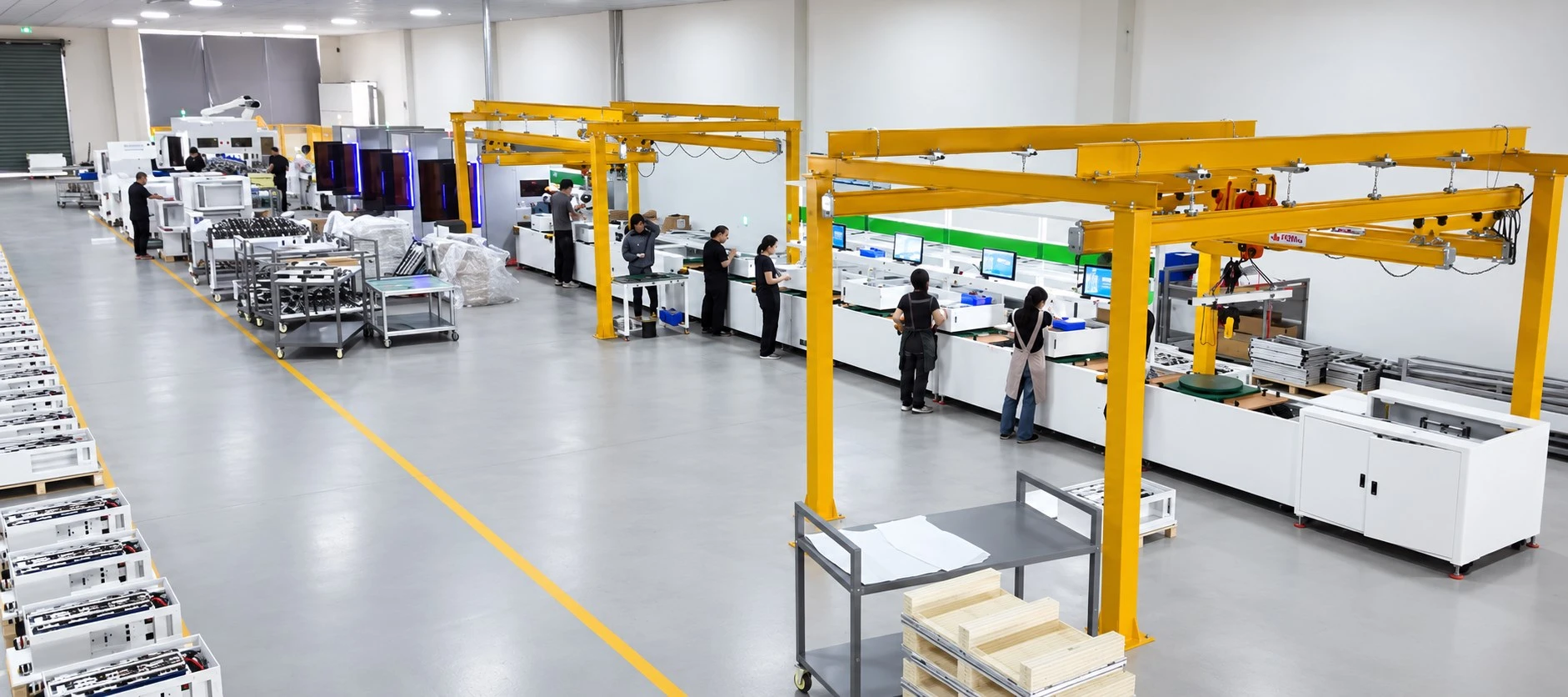
1. What Does Turnkey Prismatic PACK Line Lead Time Include?
A complete project schedule should distinguish equipment manufacturing from actual production handover.
| Project Stage | Main Activities | Key Milestone |
|---|---|---|
| Technical Review | Confirm cell format, PACK design, process and output requirements | Approved technical scope |
| Engineering Design | Process planning, equipment design and layout | Design approval |
| Procurement | Purchase critical components and long-lead materials | Procurement readiness |
| Equipment Manufacturing | Mechanical fabrication and electrical assembly | Equipment completion |
| System Integration | PLC, equipment and workstation integration | Integrated line readiness |
| Factory Acceptance Test (FAT) | Functional checks and agreed sample production | FAT approval |
| Shipment | Packing, transportation and customs clearance | Equipment arrival |
| Installation | Mechanical positioning and utility connection | Installation completion |
| Commissioning | Equipment debugging and process validation | Commissioning completion |
| Site Acceptance Test (SAT) | On-site verification against agreed criteria | SAT approval |
| Production Handover | Training and initial production support | Production handover |
Equipment arrival at the customer's factory does not mean that the line is immediately ready for stable mass production.
2. What Is a Realistic Lead Time Reference?
A published supplier example for customized prismatic and pouch battery production lines gives a 120–150-day period from contract signing to factory acceptance.
This is useful as a reference for equipment manufacturing and factory acceptance, but it should not be treated as the complete overseas turnkey delivery period.
| Schedule Component | What Must Be Confirmed |
|---|---|
| Engineering | Design scope, product drawings and approval milestones |
| Manufacturing | Equipment configuration and component availability |
| FAT | Test samples, cycle-time definition and acceptance criteria |
| Shipping | Destination, transport route and customs arrangements |
| Site Preparation | Floor, utilities, access and safety requirements |
| Installation | Mechanical assembly and electrical connections |
| Commissioning | Equipment debugging and process verification |
| SAT | Site acceptance and agreed production conditions |
| Ramp-Up | Production materials, trained operators and process stability |
Some activities can run in parallel. For example, the customer can prepare factory utilities while the supplier manufactures equipment.
However, engineering changes, delayed sample approvals and incomplete factory preparation may affect the critical project path.
3. What Equipment Is Included in a Prismatic Battery PACK Line?
The equipment configuration depends on whether the customer requires a module line, a PACK line or an integrated module and PACK production system.
A typical customized configuration may include:
| Process Section | Main Operations | Equipment Function |
|---|---|---|
| Cell Processing | Cell loading, barcode scanning and OCV testing | Cell identification and electrical inspection |
| Cell Sorting | Cell matching and sorting | Product grouping |
| Cell Preparation | Polarity detection and preparation | Ensure correct assembly orientation |
| Module Assembly | Cell stacking and compression | Build the module structure |
| Mechanical Assembly | End plate installation and fastening | Secure the module |
| Welding | CCS and busbar connection | Establish electrical connections |
| Welding Inspection | Weld inspection and related testing | Verify connection quality |
| Module Testing | Insulation and Hi-Pot testing | Verify electrical insulation |
| PACK Assembly | Enclosure preparation and module loading | Complete PACK integration |
| Electrical Integration | Busbar and BMU harness installation | Complete electrical connections |
| Final Testing | PACK air-leak testing, EOL and DCIR testing where specified | Verify final product requirements |
The exact sequence and equipment supply boundary must be confirmed against the customer's product drawings and technical agreement.
4. What Factors Affect the Delivery Schedule?
| Key Factor | Engineering Impact | Schedule Consideration |
|---|---|---|
| Cell Specifications | Dimensions, weight and terminal design affect equipment structure | Confirm cell drawings early |
| PACK Architecture | Module configuration and enclosure design affect assembly processes | Freeze product design |
| Production Capacity | Required takt time affects station quantity and automation | Define the output measurement method |
| Automation Level | Robots, automatic handling and vision inspection increase integration scope | Confirm automation boundaries |
| Welding Requirements | Material, thickness and weld geometry affect process development | Provide representative samples |
| Product Variants | Different PACK models require tooling and changeover planning | Confirm model range |
| Testing Scope | Electrical and EOL Testing require equipment and interface definition | Define test coverage |
| MES Integration | Barcode, data collection and customer interfaces require software work | Confirm data architecture |
| Factory Readiness | Utilities, floor loading and installation access affect deployment | Prepare site before shipment |
One of the most important schedule controls is freezing the product and process specifications before detailed equipment manufacturing.
5. How Should Customers Prepare for Overseas Installation?
Customer-side preparation has a direct impact on installation efficiency.
| Preparation Item | Required Information or Action |
|---|---|
| Factory Layout | Confirm the approved equipment layout and material flow |
| Floor Conditions | Verify floor loading and installation requirements |
| Electrical Supply | Prepare the power supply according to approved drawings |
| Compressed Air | Provide the required compressed air |
| Cooling and Ventilation | Prepare applicable cooling and extraction facilities |
| Network | Prepare industrial network and customer IT interfaces |
| Production Materials | Provide cells, busbars, PACK components and trial-run materials |
| Testing Resources | Prepare specified test equipment and samples |
| Personnel | Arrange operators, maintenance staff and project coordinators |
| Site Safety | Complete local safety and installation preparations |
The supplier and customer should define responsibilities for equipment unloading, positioning, utilities, installation, commissioning and production materials before shipment.
6. What Should Be Included in FAT and SAT?
FAT and SAT should be based on measurable acceptance criteria agreed before manufacturing.
| Acceptance Stage | Main Verification |
|---|---|
| Design Review | Equipment configuration and process flow |
| Internal Commissioning | Mechanical, electrical and control functions |
| FAT | Equipment operation and agreed sample production |
| Pre-Shipment Review | Outstanding issues and documentation |
| Installation Verification | Equipment position, utilities and safety |
| Commissioning | Process sequence and equipment coordination |
| SAT | On-site performance against contractual requirements |
| Production Handover | Operator training and documentation |
For a prismatic battery pack line, the acceptance plan may include cycle time, assembly accuracy, welding quality, electrical test results, traceability and equipment availability.
The exact acceptance values must be defined for the customer's product and project.
7. How Sunka Lead Approaches Turnkey Prismatic PACK Line Projects
Sunka Lead provides customized lithium battery module and PACK manufacturing equipment, covering equipment engineering, line design, manufacturing, system integration, installation and commissioning.
Our project approach considers the complete manufacturing process rather than selecting equipment stations independently.
| Engineering Area | Project Focus |
|---|---|
| Process Engineering | Match equipment configuration to the PACK manufacturing process |
| Mechanical Design | Develop fixtures, handling systems and assembly structures |
| Automation Integration | Coordinate PLC control and workstation operations |
| Welding Integration | Configure battery connection and welding stations |
| Inspection Integration | Plan applicable visual and electrical inspections |
| Testing Integration | Define module and PACK testing interfaces |
| MES and Traceability | Plan barcode identification and production data collection |
| Project Delivery | Coordinate FAT, shipment, installation and commissioning |
Sunka Lead develops the project schedule according to the approved technical agreement, equipment scope, procurement plan and customer-side preparation.
For an overseas project, Sunka Lead also considers installation resources, local utilities, commissioning materials and acceptance responsibilities during project planning.
Frequently Asked Questions
1. How long does it take to manufacture a prismatic battery PACK line?
Published supplier examples for customized prismatic or pouch battery lines include approximately 120–150 days from contract signing to factory acceptance. Actual timing depends on project complexity and the approved technical scope.
2. Does the equipment lead time include overseas installation?
Not necessarily. Equipment manufacturing and FAT may be quoted separately from international shipping, customs, installation, commissioning and SAT. These items should be explicitly included in the project contract.
3. What is the difference between FAT and SAT?
FAT is conducted at the equipment supplier's facility before shipment. SAT is performed at the customer's facility after installation to verify the system under agreed site conditions.
4. Can equipment manufacturing and factory preparation happen simultaneously?
Yes. Equipment engineering and manufacturing can proceed while the customer prepares the factory, provided the required layout, utilities and interface information have been confirmed.
5. What causes delays in turnkey battery PACK projects?
Common causes include late product specification changes, delayed sample availability, long-lead components, incomplete factory preparation, unclear acceptance criteria and additional automation or MES requirements.
6. What information is needed to estimate the lead time?
Customers should provide cell specifications, PACK drawings, target output, process flow, automation requirements, testing scope, factory layout and installation destination.
7. Is a module assembly line the same as a complete PACK line?
No. A module line focuses on cell grouping, stacking, compression, connection and module testing. A complete PACK line may also include enclosure integration, cooling system assembly, electrical integration and PACK-level EOL testing.
Plan Your Prismatic Battery PACK Line Project with Sunka Lead
Planning a new prismatic battery PACK manufacturing facility or expanding your current production capacity?
Sunka Lead provides customized battery pack assembly line solutions based on product specifications, target production capacity and factory conditions.
Contact Sunka Lead with your cell specifications, PACK drawings and production requirements to discuss equipment configuration and a project-specific delivery schedule.
About Sunka Lead
Sunka Lead is the brand of Guangdong Songke Leading intelligent equipment Co., Ltd., a provider of lithium battery module and PACK production equipment and intelligent manufacturing solutions.
The company focuses on prismatic, cylindrical and pouch battery module and PACK production equipment and provides customized automated production line solutions for global battery and energy storage manufacturers.
Its solutions integrate technologies such as automated assembly, industrial robotics, machine vision, laser processing, AGV material handling, automated inspection and production data management.
Sunka Lead aims to help customers build more efficient, flexible and reliable lithium battery manufacturing systems.