
 English
 简体中文
简体中文

An energy storage system is far more than a cabinet filled with batteries.
A typical battery energy storage system integrates several functional subsystems, including the battery pack, battery management system (BMS), power conversion system (PCS), energy management system (EMS), thermal management system (TMS), and power distribution and communication equipment.
Each subsystem performs a different function, but reliable system performance depends on how effectively these components work together.
From a manufacturing perspective, the battery PACK is one of the most important links between individual cells and the finished energy storage system. PACK assembly quality directly affects electrical connection reliability, thermal management, monitoring, testing, traceability, and subsequent system integration.
As a provider of lithium battery module and PACK intelligent manufacturing equipment and production line solutions, Sunka Lead focuses on the manufacturing side of energy storage batteries, providing equipment and integrated lines covering cell processing, module assembly, PACK assembly, welding, testing, and quality traceability.
What are the main components of an energy storage system?
Battery pack | Battery pack | Stores electrical energy and serves as the main energy storage unit |
BMS | Battery management system | Monitors battery operating conditions and provides battery protection and management |
PCS | Power conversion system | Performs bidirectional AC/DC power conversion |
EMS | Energy management system | Handles system monitoring, control strategies, and energy dispatch |
TMS | Thermal management system | Maintains the battery within an appropriate operating temperature range |
Power distribution and communication | Power distribution and communication system | Handles electrical distribution, communication, auxiliary control, and system coordination |
These subsystems do not operate independently. They are connected through electrical interfaces, communication networks, control logic, and system-level safety strategies.
1. Battery pack: the “heart” of the energy storage system
The battery pack is the part of the energy storage system that actually stores electrical energy.
Lithium iron phosphate, or LFP, cells are widely used in stationary energy storage applications because of their thermal stability, cycle life, and suitability for large-scale energy storage systems.
However, a battery pack is not simply a collection of cells placed inside a metal enclosure.
Depending on the product architecture, battery cells typically pass through a series of manufacturing processes such as:
cell inspection → sorting → stacking → compression → module assembly → electrical connection → PACK assembly → testing
The finished PACK may also integrate or interface with:
busbars and CCS assemblies;
high-voltage and low-voltage wiring;
BMS-related components;
thermal management interfaces;
structural frames and enclosures;
insulation and safety components;
sensors and communication interfaces.
This is why the quality of a battery PACK depends heavily on assembly accuracy, welding quality, electrical connectivity, mechanical consistency, testing capability, and data traceability throughout the production process.
2. BMS: the battery’s “personal safety guard”
BMS stands for battery management system.
Its role is to monitor and manage key battery operating parameters, which may include:
cell voltage;
battery temperature;
pack current;
state of charge (SOC);
state of health (SOH);
fault and alarm conditions.
In simple terms, the BMS helps keep the battery within defined operating limits and supports safe, stable battery operation.
When abnormal conditions such as overvoltage, undervoltage, overtemperature, or other faults occur, the BMS can participate in protection and control logic.
However, reliable BMS operation also depends on PACK manufacturing quality.
For example, poor cell consistency, unstable busbar welding, incorrect harness installation, or unreliable sensing connections can affect signal acquisition and long-term system stability.
For PACK manufacturers, this means BMS integration should not be treated as an isolated assembly step. It must be coordinated with cell selection, electrical connection, wiring, testing, and traceability.
3. PCS: the “translator” between the battery and the grid
PCS stands for power conversion system.
It is responsible for bidirectional power conversion between the battery system and the AC side.
During charging:
AC power → DC power → battery
During discharging:
battery → DC power → AC power
This bidirectional conversion allows electrical energy to move between the battery and the external power system.
Depending on the project, the PCS may also support functions such as power regulation, charging and discharging control, grid interaction, and coordination with the EMS.
From the battery manufacturing side, stable electrical connections, correct PACK configuration, insulation performance, and reliable output interfaces all contribute to successful integration with the PCS.
4. EMS: the “commander” of the energy storage system
EMS stands for energy management system.
It functions as the system-level control and coordination layer.
Typical EMS responsibilities may include:
system data acquisition;
operating status monitoring;
charging and discharging strategies;
energy dispatch;
power scheduling;
system coordination;
operational logic management.
If the entire energy storage system is viewed as a coordinated team, the EMS acts as the “commander” that determines how different subsystems should operate together.
It does not store energy itself. Instead, it uses system data and operating strategies to determine when the system should charge, discharge, reduce power, or respond to specific operating conditions.
5. TMS: the battery’s “temperature control chamber”
TMS stands for thermal management system.
Battery performance is strongly influenced by temperature, so energy storage systems generally require a thermal management strategy to help keep the battery within an appropriate operating temperature range.
Depending on system design, thermal management may use:
liquid cooling;
air cooling;
heating;
refrigerant-based cooling;
or a combination of different methods.
Excessive temperature can affect battery life, safety, and performance, while low temperature can reduce charging and discharging capability.
For this reason, the TMS can be understood as the battery system’s “temperature control chamber”.
From a PACK manufacturing perspective, thermal management also introduces additional assembly and testing requirements.
For example, a liquid-cooled PACK manufacturing process may include:
liquid cooling plate preparation;
cleaning;
leak testing;
seal inspection;
adhesive dispensing;
module mounting;
cooling interface assembly.
In a Sunka Lead energy storage battery pack production line, these processes can be configured according to the customer's battery architecture, cooling method, production takt, and automation requirements.
6. Power distribution and communication: the supporting infrastructure behind the system
Power distribution and communication equipment may not attract as much attention as the battery, PCS, or EMS, but these components are essential to system operation.
Typical devices may include:
circuit breakers;
fuses;
contactors;
high-voltage distribution components;
low-voltage distribution components;
communication modules;
control units;
wiring harnesses;
communication interfaces.
Together, these components support electrical distribution, device communication, protection, monitoring, and coordination.
A reliable energy storage system therefore depends not only on several major components, but also on the quality and integration of many supporting devices.
Why is the energy storage battery PACK production line important?
If we trace an energy storage system back to its manufacturing origin, the battery PACK is one of the most important intermediate products.
A complete PACK production line must integrate multiple processes rather than simply connect several standalone machines.
For a typical prismatic energy storage battery project, the process may include:
cell loading → barcode scanning → OCV testing → polarity inspection → cell sorting → stacking → compression → terminal cleaning → CCS/busbar installation → laser welding → module inspection → PACK assembly → BMS and harness installation → comprehensive testing → EOL Testing
Each process affects the quality of the finished battery PACK.
Critical manufacturing factors include:
cell consistency;
cell orientation;
stacking accuracy;
compression force;
busbar positioning;
laser welding quality;
electrical connection reliability;
insulation performance;
thermal management assembly;
test coverage;
production data traceability.
For this reason, the production line should be designed around the actual battery product rather than around individual equipment.
Sunka Lead develops energy storage PACK production solutions based on factors such as cell format, PACK structure, target production capacity, automation level, workshop layout, testing requirements, and data management strategy.
Typical equipment for an energy storage PACK production line
Prismatic energy storage battery PACK production line
A prismatic battery PACK production line can be configured for different automation levels and product structures.
Typical stations may include:
automatic cell loading;
barcode identification;
OCV testing;
polarity inspection;
CCD positioning;
cell sorting;
automatic stacking;
module compression;
laser cleaning;
CCS installation;
busbar installation;
laser welding;
welding inspection;
PACK assembly;
BMS and wiring installation;
comprehensive testing;
EOL testing.
Sunka Lead can configure these stations according to the customer's cell specification, module design, PACK architecture, takt requirement, and factory layout.
Cell sorting equipment
Cell consistency is an important factor in battery module and PACK manufacturing.
Cell sorting equipment can integrate functions such as barcode identification, voltage testing, internal resistance testing, OCV inspection, and classification according to the project requirements.
This allows cells to be grouped before module or PACK assembly and provides data for subsequent traceability.
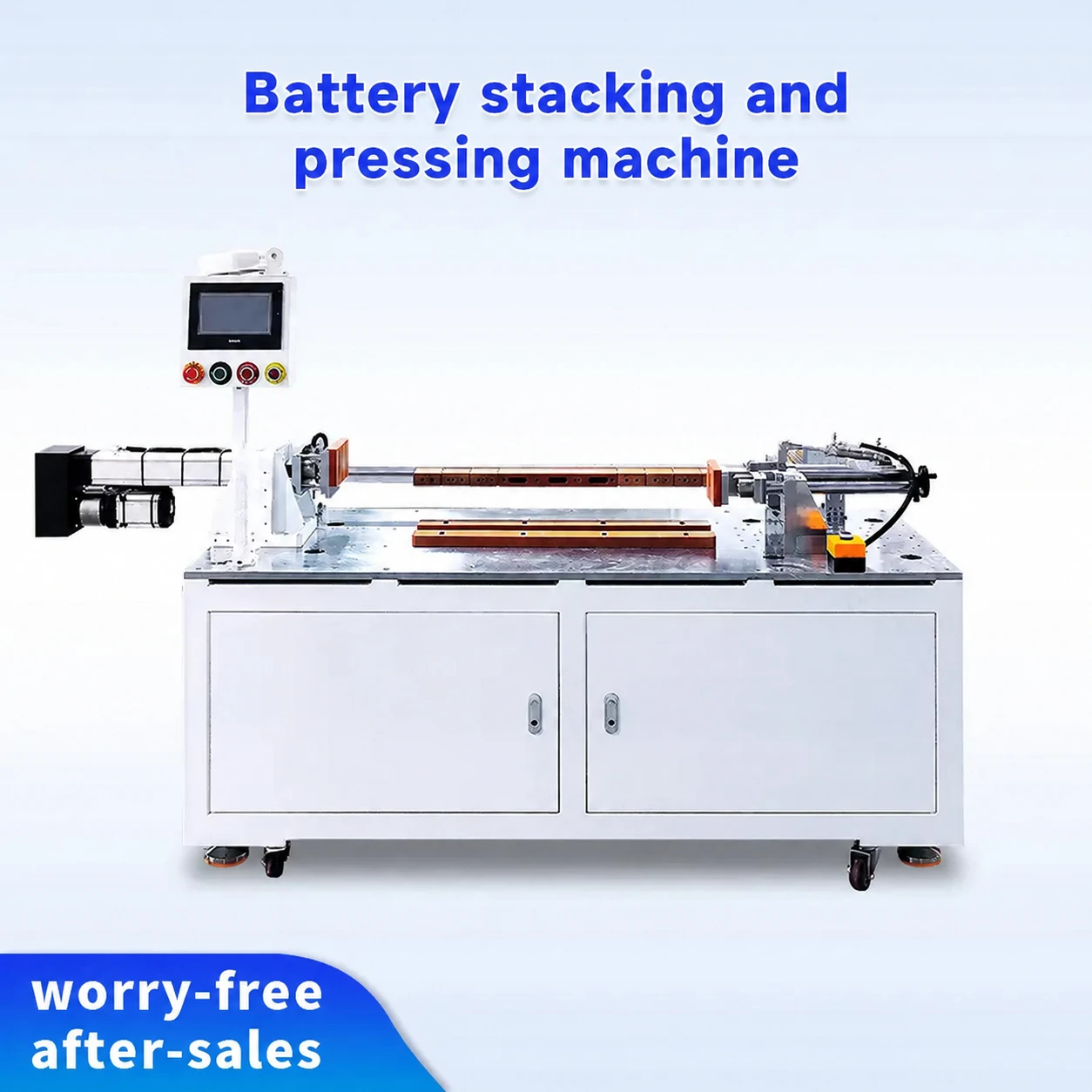
Prismatic battery stacking and pressing equipment
During module assembly, cells must be stacked according to predefined quantity, orientation, and sequence.
The module may then require controlled compression before further assembly.
A stacking and pressing system can therefore be designed around:
cell dimensions;
module dimensions;
compression force;
stacking sequence;
positioning accuracy;
automation level.
Sunka Lead can provide customized stacking and pressing solutions for different prismatic battery module structures.
Laser welding equipment
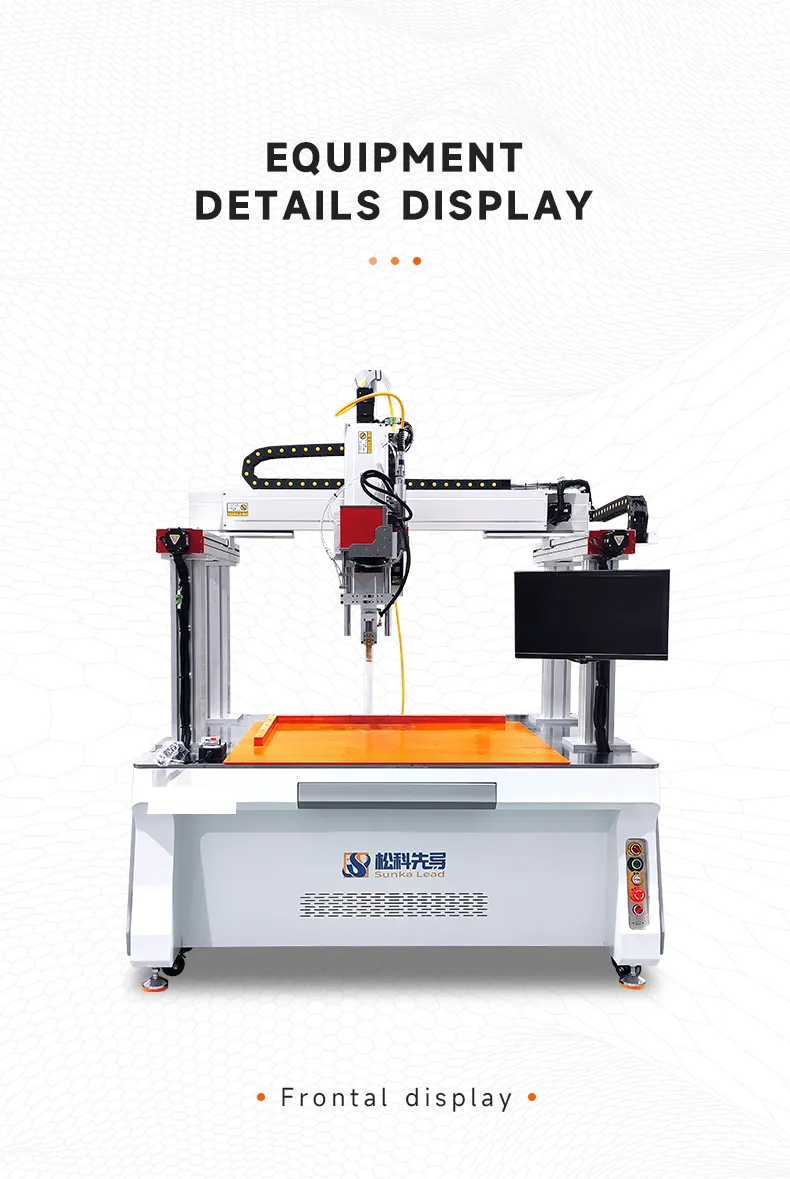
Laser welding is widely used for electrical connection processes such as busbar-to-terminal welding.
A stable welding process depends on several factors, including:
welding path;
positioning accuracy;
laser parameters;
material characteristics;
focal position;
weld quality inspection.
Vision positioning, laser cleaning, welding process control, and post-weld inspection can therefore be integrated into the production line according to project requirements.
From cells to an energy storage system: a complete manufacturing chain
The final energy storage system may contain a battery cabinet, PCS, BMS, EMS, TMS, and power distribution equipment.
However, from the manufacturing perspective, the process can be understood as:
Cell → Module → PACK → Battery cabinet → Energy storage system
The PACK sits between cell manufacturing and system integration.
This makes PACK production a critical stage where mechanical assembly, electrical connection, thermal management, monitoring interfaces, safety design, and product testing come together.
For companies planning an energy storage battery manufacturing project, the key question is therefore not simply:
“Which machine should we purchase?”
A more important question is:
“How should the entire PACK manufacturing process be designed around our cells, product architecture, capacity, quality requirements, and automation target?”
This is the type of manufacturing challenge that Sunka Lead focuses on solving.
Rather than simply combining individual machines, Sunka Lead develops production solutions around the customer's actual battery product and manufacturing process, from cell processing and module assembly to PACK integration, welding, testing, and production traceability.
FAQ
Q1.What are the main components of a battery energy storage system?
A typical battery energy storage system includes the battery pack, BMS, PCS, EMS, thermal management system, power distribution equipment, communication equipment, and other auxiliary devices.
Q2.What is the function of the battery PACK in an energy storage system?
The battery PACK integrates cells or modules into a mechanical and electrical assembly that provides energy storage capacity, structural protection, electrical connections, monitoring interfaces, and thermal management interfaces.
Q3.What equipment is required for an energy storage PACK production line?
Typical equipment may include cell loading systems, OCV testing equipment, cell sorting machines, stacking and pressing equipment, CCD vision systems, laser cleaning machines, laser welding equipment, PACK assembly stations, comprehensive testers, and EOL testing equipment.
Q4.Can an energy storage PACK production line be customized for different cell sizes?
Yes. The production line should normally be designed according to the cell dimensions, capacity, module structure, PACK architecture, production takt, automation level, factory layout, and testing requirements.
Q5.Can the same PACK line support multiple battery cell specifications?
It depends on the product range and the line design. Fixtures, handling systems, compression mechanisms, vision systems, welding processes, and software recipes can be designed with a certain degree of flexibility to support multiple compatible cell or PACK formats.