
 English
 简体中文
简体中文

With fast-charging technology continuing to advance in new energy passenger vehicles and commercial and industrial energy storage projects expanding rapidly, 46-series large cylindrical batteries have become one of the most active segments in the battery industry. According to the latest industry research data, the domestic market for automated PACK production lines supporting large cylindrical batteries is expected to officially exceed RMB 10 billion in 2026.
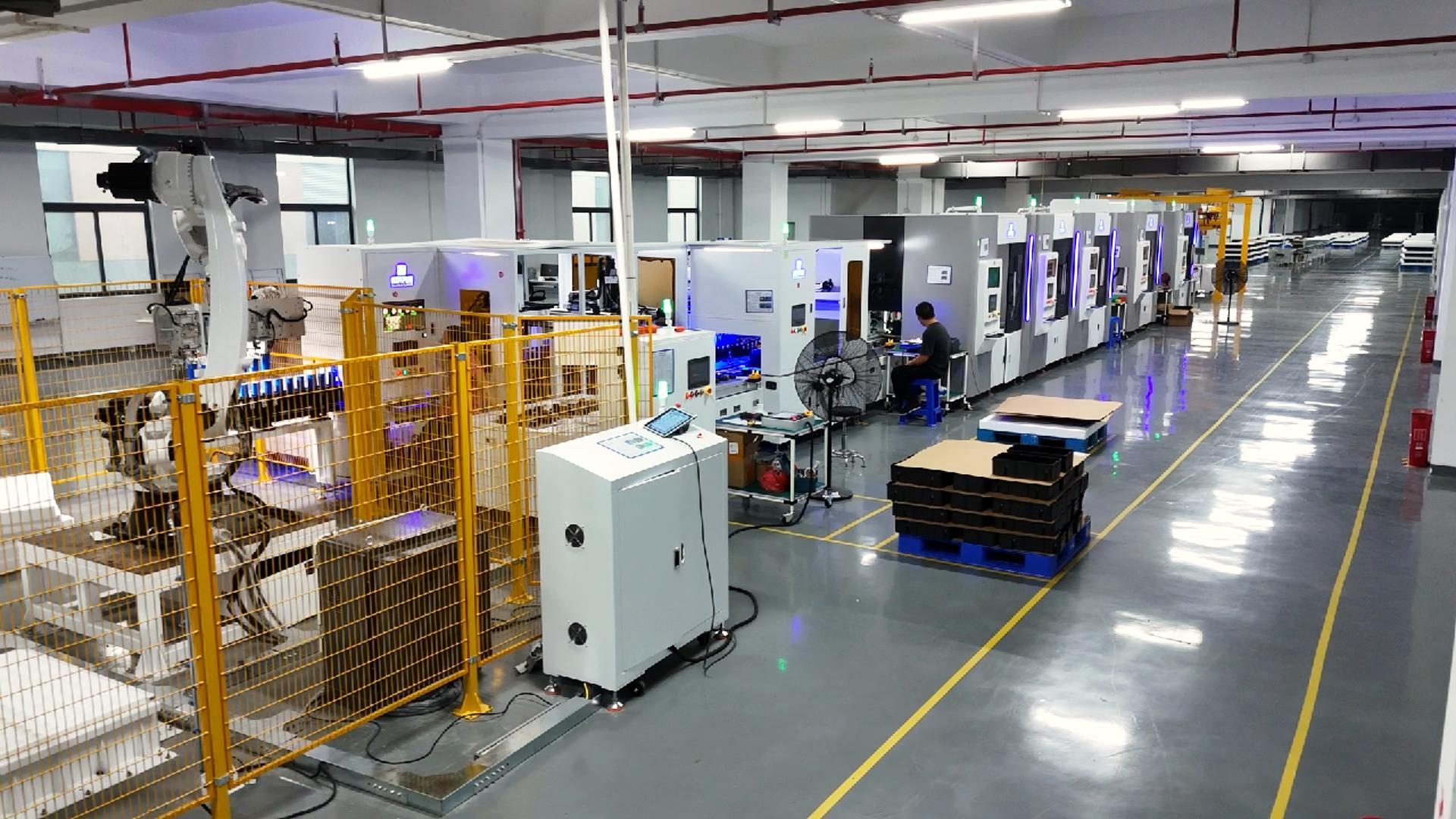
The market opportunity is clearly visible. However, behind this rapid expansion, competition among equipment suppliers is also intensifying. The basis of competition is no longer simply price. Instead, manufacturers are increasingly being evaluated on their process technology, production flexibility, product compatibility and turnkey line delivery capabilities.
In the previous two years, the industry was still in an early-stage validation phase. The number of participating suppliers was relatively limited, and the market mainly consisted of small-batch pilot lines and basic assembly equipment.
By 2026, however, leading cell manufacturers have accelerated capacity expansion, while power battery and energy storage manufacturers are upgrading or replacing older production lines on a large scale. This has stimulated demand throughout the upstream and downstream equipment supply chain.
Despite the size of this emerging market, polarization among equipment suppliers is becoming increasingly evident. At present, domestic suppliers of large cylindrical battery PACK equipment can generally be divided into three tiers, each with a distinct business model and target market.
The first tier consists mainly of established large-scale equipment groups with strong comprehensive capabilities. These companies are able to undertake large GWh-scale turnkey projects and mainly serve leading battery manufacturers with substantial production capacity.
The second tier consists of specialized mid-sized equipment suppliers focused on the large cylindrical battery segment. These companies typically concentrate on refining core processes such as welding, cell assembly and integrated module/PACK assembly, making them suitable for small- to medium-scale mass-production projects.
The third tier consists primarily of smaller equipment manufacturers offering low-cost and relatively simple machines. Their product portfolios are usually limited, with equipment mainly designed to meet basic assembly requirements and entry-level pilot-production needs.
Why equipment selection is becoming more difficult for small and medium-sized battery manufacturers
This increasingly segmented competitive landscape has also created a common procurement problem for small and medium-sized battery manufacturers: focusing too heavily on the initial equipment price while overlooking production compatibility and long-term operating costs.
Many low-cost general-purpose production lines on the market are unable to properly support the dedicated processes required for all-tab large cylindrical cells. Typical problems may include higher welding defect rates, inefficient product changeovers and limited compatibility with digital production management systems.
After production begins, these limitations may not only restrict capacity improvements but also increase material losses, rework and maintenance costs.
To address the practical requirements of small- and medium-scale battery manufacturers, Sunkalead positions its solutions in the higher-value segment of the large cylindrical PACK equipment market, focusing on cost-effective integrated production lines that balance capital investment with mass-production performance.
Process capability is becoming more important than equipment price
Compared with high-cost turnkey systems from large equipment groups and low-end basic assembly equipment, Sunkalead's solutions are designed around the practical production requirements of a broad range of battery manufacturers.
At the core process level, the engineering team has continuously optimized welding technologies for all-tab large cylindrical cells based on extensive project implementation experience.
The objective is to reduce common welding issues such as spatter, insufficient welding and thermal damage, helping improve first-pass yield and reduce unnecessary losses during mass production.
The production equipment can be configured for mainstream large cylindrical cell formats such as 4680 and 46120.
Flexible production is becoming a core requirement
Flexible customization is another important competitive capability.
Orders in both the energy storage and power battery sectors are increasingly characterized by smaller batches, multiple product variants and more frequent changeovers. Under these conditions, a production line dedicated to only one fixed product specification can significantly limit manufacturing flexibility.
Sunkalead adopts a modular production line architecture, allowing different cell specifications and module series-parallel configurations to be accommodated without extensive modification of the overall equipment structure.
This makes it possible to switch between different product configurations within a relatively short changeover period while supporting both standardized mass production and customized production requirements.
For battery manufacturers with limited capital budgets or those planning to manufacture multiple product models on the same production system, this approach can help reduce equipment investment and improve asset utilization.
Digital production management and full-process traceability
Digital production management is also becoming an increasingly important part of large cylindrical battery PACK manufacturing.
Sunkalead production lines can establish a closed-loop data structure across key manufacturing processes.
From cell sorting, precision assembly and laser welding to air leak testing and aging testing, production data can be recorded and retrieved throughout the manufacturing process.
The equipment supports mainstream industrial communication protocols and can be connected with the customer's MES system, enabling functions such as:
- process traceability;
- production data collection;
- equipment status monitoring;
- maintenance alerts;
- quality data management.
This helps manufacturers move away from traditional, loosely managed production processes and toward more structured and data-driven manufacturing.
The large cylindrical battery PACK equipment market is still at an early stage
From a longer-term perspective, an RMB 10 billion large cylindrical battery PACK equipment market is likely to represent only an early stage of industry development.
As production capacity continues to expand, competition among equipment suppliers is also expected to accelerate.
Manufacturers relying solely on low-price strategies and basic equipment are likely to face increasing pressure. In contrast, solution providers with strong capabilities in process engineering, flexible production, product compatibility and digital manufacturing will be better positioned to compete over the long term.
Looking ahead, Sunkalead will continue to focus on complete equipment solutions for large cylindrical battery module and PACK manufacturing, continuously improving process technologies and production line architecture.
By providing production line solutions designed around high compatibility, controlled investment and efficient manufacturing, Sunkalead aims to support more power battery and energy storage manufacturers as the large cylindrical battery market continues to expand.
Sunkalead is the international brand of Guangdong Songke Leading Intelligent Equipment Co., Ltd.
The company specializes in the design, engineering and manufacturing of lithium battery module and PACK production equipment, providing customized solutions for prismatic, cylindrical and pouch battery applications.
From cell processing and module assembly to laser welding, PACK assembly, testing and MES integration, Sunkalead provides production equipment and turnkey line solutions for lithium battery manufacturers worldwide.