
 English
 简体中文


Installing battery racks and PACK units inside a Battery Energy Storage System (BESS) container is a complex material handling and assembly process.
Unlike conventional battery module assembly, BESS container integration involves heavy components, restricted installation space, precise positioning and multiple mechanical and electrical connections.
The objective is not simply to move battery modules into a container. It is to transfer, position, install and secure the battery assemblies while maintaining safety, dimensional accuracy and efficient production flow.
1. Understand the Difference Between Battery Rack and PACK Installation
Battery racks and PACK units are related but should not be treated as the same handling object.
| Component | Installation Considerations |
|---|---|
| Battery PACK / Module | Weight, dimensions, lifting points and insertion direction |
| Battery Rack | Structural dimensions, overall weight, center of gravity and mounting interfaces |
| Rack with Installed Modules | Combined load, structural rigidity and transportation stability |
| BESS Container | Internal clearance, access openings, mounting structure and installation sequence |
Some BESS designs install battery modules or PACK units individually into pre-installed racks.
Other designs may use preassembled rack structures that require complete lifting and positioning.
The handling solution must follow the actual battery system architecture.
2. What Is the Typical BESS Container Installation Process?
A BESS container assembly line generally combines container handling, battery installation, mechanical fastening and system integration.
| Main Process | Key Operations |
|---|---|
| Container Receiving | Unloading and transferring the empty container |
| Container Positioning | Moving the container to the designated assembly station |
| Internal Preparation | Checking mounting structures, rails and auxiliary system interfaces |
| Battery Transfer | Moving PACK units or rack assemblies to the installation position |
| Alignment | Adjusting height, horizontal position and insertion direction |
| PACK Installation | Loading and positioning the battery assemblies |
| Mechanical Fixing | Securing PACK units and rack structures |
| Electrical Integration | Installing busbars, cables, harnesses and connectors |
| Auxiliary System Integration | Connecting liquid cooling and fire protection systems |
| Final Inspection | Performing required electrical and system-level testing |
The installation sequence should be determined by the container design and the manufacturer's assembly procedures.
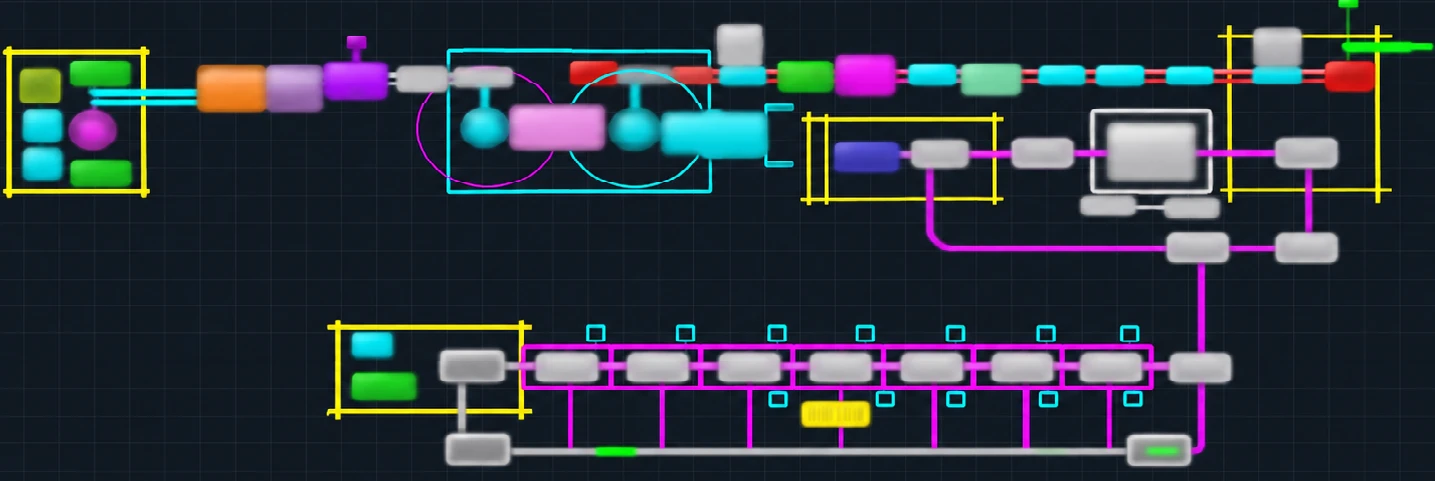
3. What Equipment Is Used for Battery Transfer and Installation?
Different equipment performs different material handling functions.
| Equipment | Main Function |
|---|---|
| Heavy-Duty Straddle Carrier | Transfers large and heavy BESS containers |
| Heavy-Duty AGV | Moves containers or workstations between production areas |
| Gantry Crane or Lifting System | Transfers battery assemblies to loading equipment |
| Electric Insertion Stacker | Supports lifting, positioning and insertion of PACK units |
| Roller Support Platform | Facilitates controlled movement during insertion |
| Laser Alignment System | Assists in aligning the PACK and container interfaces |
| Camera Monitoring System | Provides visual assistance during installation |
| Electric Torque Tools | Supports controlled mechanical fastening |
The choice of equipment depends on the weight, dimensions, center of gravity, loading height and required production takt time.
4. How Does an Automatic PACK Insertion System Work?
PACK insertion is one of the most demanding operations in BESS container assembly.
A typical assisted insertion process includes several coordinated actions.
The PACK is transferred from the upstream handling station to the insertion equipment.
The lifting platform adjusts the PACK to the required installation height.
Laser alignment devices and camera systems assist with positioning.
The insertion mechanism moves the PACK toward the designated mounting location.
Pressure and position monitoring help prevent abnormal pushing forces.
The PACK is secured after reaching the required installation position.
For fully automated systems, these operations can be further integrated with robotic handling, automatic positioning and interlocked control systems.
However, automated container transfer does not automatically mean fully automatic PACK insertion. These are separate automation functions and should be evaluated independently.
5. Semi-Automatic vs. Fully Automatic BESS Installation
The appropriate automation level depends on project requirements and investment priorities.
| Configuration | Main Characteristics | Suitable Conditions |
|---|---|---|
| Semi-Automatic | AGV transfer, powered lifting and insertion equipment, operator-assisted alignment and installation | Flexible production and project-specific container designs |
| Robot-Assisted | Automated handling and positioning combined with operator-assisted assembly | Repetitive operations with defined product structures |
| Fully Automatic | Integrated robotic handling, automatic alignment, insertion and fastening | Stable product designs and higher automation requirements |
Fully automated installation is not always the most economical option.
When battery rack structures, container dimensions or connection designs vary significantly, a carefully engineered semi-automatic solution may offer a better balance between investment, flexibility and operational reliability.
6. Engineering Considerations for Safe BESS Installation
Before designing a BESS container assembly line, manufacturers should evaluate several important factors.
| Engineering Factor | Why It Matters |
|---|---|
| Maximum Component Weight | Determines lifting and transfer equipment capacity |
| Center of Gravity | Affects lifting stability and transportation safety |
| Container Internal Dimensions | Determines available installation clearance |
| Loading Height and Reach | Defines lifting and insertion mechanism requirements |
| Floor Load Capacity | Ensures safe equipment and material movement |
| Positioning Accuracy | Prevents interference with mounting structures |
| Insertion Force Monitoring | Helps prevent damage during pushing and installation |
| Safety Interlocks | Coordinates equipment movement and personnel protection |
| Production Flow | Reduces unnecessary handling and waiting time |
Safety systems should include suitable emergency stops, travel limits, anti-collision protection and operating interlocks.
The actual safety architecture must be confirmed through project-specific risk assessment.
7. Sunka Lead's BESS Container Integration Experience
Sunka Lead provides customized BESS container assembly and PACK integration equipment solutions.
In an overseas BESS project, the documented semi-automatic arrangement combines heavy-duty container handling, AGV transfer and dedicated PACK insertion equipment.
The PACK installation process uses an electrically powered insertion vehicle with adjustable lifting and positioning functions. Laser alignment and camera monitoring assist operators during the insertion operation.
After PACK installation, the assembly process continues with mechanical fastening, busbar installation, wiring and connector connections, followed by auxiliary system integration and testing.
This approach demonstrates an important principle in BESS manufacturing: successful automation requires coordination between material handling, positioning, mechanical assembly and electrical integration.
The exact automation boundary is customized according to the customer's container design, battery architecture and production requirements.
FAQ
Q1.Can an AGV automatically install battery PACK units inside a BESS container?
Not necessarily. An AGV primarily performs material or container transfer. PACK insertion may require additional lifting, alignment and pushing equipment, with manual or robotic operation depending on the project design.
Q2.What is the difference between a battery insertion stacker and a conventional forklift?
A dedicated insertion stacker can be designed with controlled lifting, positioning, guiding and pushing functions to support accurate battery installation inside a restricted container space.
Q3.Can a BESS container assembly line handle different battery rack sizes?
Potentially. Compatibility depends on the container structure, rack dimensions, load capacity, lifting range and insertion mechanism. Changeover tooling and adjustable positioning systems may be required.
Q4.Does BESS container assembly include electrical and cooling system connections?
Depending on the project scope, it may include busbar installation, high-voltage and communication wiring, liquid cooling connections, fire protection integration and final testing.
Automating battery rack and PACK installation inside BESS containers requires more than a conventional material handling system.
It involves coordinated container transfer, battery lifting, precise alignment, controlled insertion, mechanical fastening and system integration.
Sunka Lead develops customized BESS container assembly solutions that combine material handling equipment, PACK insertion systems and downstream assembly processes according to actual project requirements.
About Sunka Lead
Sunka Lead is the international brand of Guangdong Songke Leading Intelligent Equipment Co., Ltd., specializing in lithium battery module and PACK manufacturing equipment, customized production lines and BESS container assembly and integration solutions.
Our solutions cover prismatic, cylindrical and pouch battery applications, with capabilities in cell testing and sorting, module assembly, laser cleaning and welding, PACK assembly, inspection and BESS container integration.
For project inquiries, share your battery cell specifications, module/PACK drawings, BESS container dimensions, rack structure, target production capacity and automation requirements. Sunka Lead develops customized equipment and production line solutions around your product architecture and manufacturing goals.