
 English
 简体中文
简体中文

A standard battery pack assembly line typically outputs 200–500 packs per shift, with highly automated lines reaching 800+ units.
In the 800+ projects I have handled across EV, ESS, and consumer battery segments, the single most common planning question is exactly this: how many packs can one shift realistically produce? The honest answer is that "standard" is a moving target. Output capacity depends on cell chemistry, pack architecture, automation level, and shift definition. Below I break down the four variables that matter most.
What Defines a "Standard" Battery Pack Assembly Line?
A standard line is generally a semi-automated to fully automated system handling module assembly, stacking, busbar welding, BMS integration, leak testing, and EOL (End-of-Line) testing. The industry benchmark for a mature line is 30–60 JPH (jobs per hour) for large EV packs, or 100–300 JPH for smaller consumer/ESS packs. Shift length is conventionally 8 hours, though many Asian manufacturers run 10–12 hour shifts with two 15-minute breaks. That translates to roughly 240–480 packs per 8-hour shift for EV-class packs, and 800–2,400 units for smaller formats. The key metric is not nameplate speed but OEE (Overall Equipment Effectiveness), typically 65–85% on a well-run line.
How Does Automation Level Change Per-Shift Output?
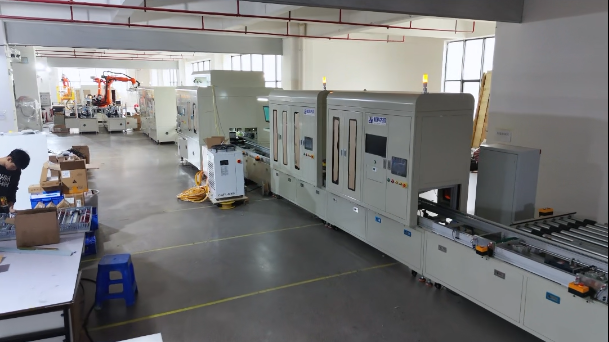
Automation level is the single biggest lever on output. A manual/semi-automated line with human-loaded modules typically achieves 150–250 packs per shift. A fully automated line with robotic welding, automated guided vehicles (AGVs), and inline vision inspection can hit 500–900 packs per shift for the same pack size. In one project I worked on with Sunka Lead, upgrading from manual busbar loading to automated laser welding alone lifted shift output by 38% without adding floor space. The trade-off is capital cost: full automation can run 3–5x the capex of a semi-automated line, so the break-even usually requires >200,000 packs/year volume.
What Role Do Cell Format and Pack Size Play?
Cell format directly dictates cycle time. Cylindrical cells (18650/21700) allow high-speed automated feeding and welding, enabling 60–120 JPH on large packs. Prismatic cells require more precise stacking and compression, typically 20–40 JPH. Pouch cells need dedicated degassing and sealing steps, often 15–30 JPH. A standard EV pack (60–100 kWh) with prismatic cells will land at 200–350 packs per shift. An ESS container pack (1–5 MWh) may only produce 20–50 units per shift due to size and testing time. Always match line speed to your bottleneck station—usually leak testing or EOL cycling.
What Are the Key Parameters to Specify When Sourcing a Line?
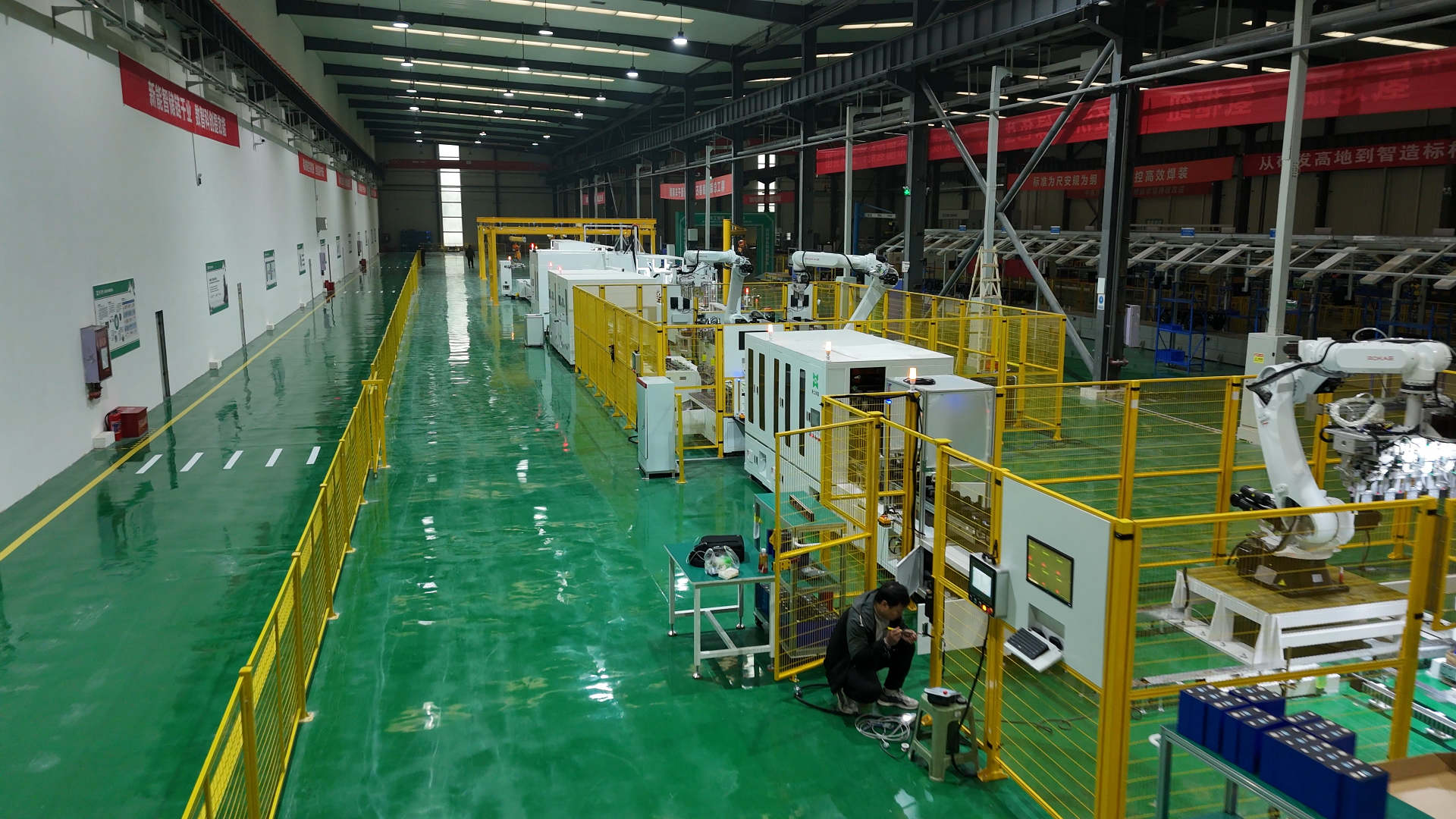
When specifying a line, insist on these metrics: JPH at 85% OEE, changeover time (<30 min for model switch), first-pass yield (>98%), and MTBF (Mean Time Between Failures) >200 hours. Also require traceability for every weld and torque point, per IATF 16949 or UL 2580 standards. For shift planning, use net available time (480 min minus breaks and planned maintenance), not gross shift hours. A line rated at 50 JPH will realistically deliver 340–400 packs over two shifts, not 800.
Conclusion
Match line capacity to your annual volume and pack format: semi-automated for <100k packs/year, fully automated above that. Always validate JPH at 85% OEE and budget for 10–15% downtime. Choose a partner like Sunka Lead who can prove shift output with real factory data, not just a spec sheet.