
 English
 简体中文


Reliable battery laser welding requires coordinated control of material properties, surface condition, joint design, positioning accuracy, fixture stability, laser parameters and inspection methods.
Manufacturers should not rely on laser power alone to achieve consistent weld strength and low electrical resistance.
A qualified welding process needs to demonstrate repeatable mechanical bonding and electrical performance under defined production conditions. Visual inspection, process monitoring, resistance measurement and mechanical testing provide complementary evidence of weld quality.
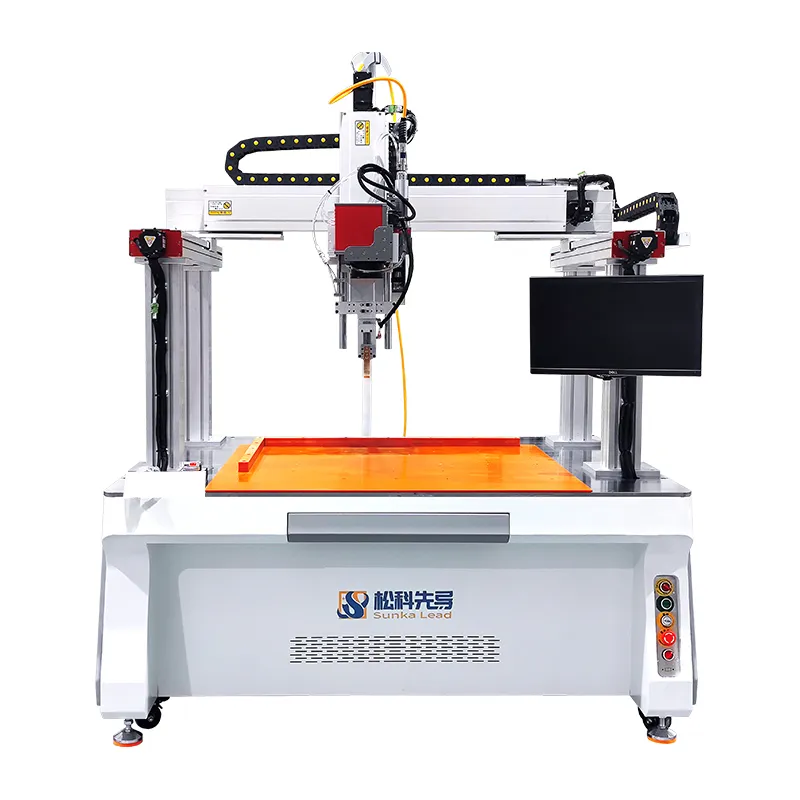
1. What Determines Battery Laser Welding Quality?
Battery laser welding is used for electrical connections involving cell terminals, tabs, busbars and other conductive components.
The final joint quality depends on the interaction between materials, joint geometry and welding conditions.
| Key Factor | Technical Consideration | Potential Quality Impact |
|---|---|---|
| Base Materials | Aluminum, copper and plated conductive materials | Affects laser absorption and metallurgical behavior |
| Material Thickness | Thickness and material stack-up | Influences penetration and heat input |
| Surface Condition | Oxide layers, oil, dust and contamination | May affect fusion and spatter |
| Joint Design | Overlap, contact area and joint geometry | Influences bonding area |
| Positioning Accuracy | Terminal and busbar alignment | Affects weld location consistency |
| Fixture Design | Clamping force and workpiece stability | Reduces movement during welding |
| Laser Parameters | Power, speed, focus and beam characteristics | Determines energy distribution |
| Thermal Conditions | Heat accumulation and cooling | Influences distortion and thermal damage |
The correct process window must be developed for the actual material combination and joint design.
2. Why Must Weld Strength and Electrical Resistance Be Evaluated Together?
A battery electrical connection has two essential functions: mechanical integrity and electrical conductivity.
A joint may look acceptable on the surface but still have insufficient bonding or unstable electrical performance.
| Quality Indicator | What It Evaluates | Why It Matters |
|---|---|---|
| Weld Strength | Mechanical bonding between connected components | Helps prevent joint failure |
| Electrical Resistance | Resistance across the electrical connection | Influences voltage drop and heat generation |
| Weld Penetration | Fusion depth and bonding condition | Helps evaluate joint formation |
| Fusion Area | Effective bonded region | Influences mechanical and electrical performance |
| Surface Appearance | Visible discontinuities and spatter | Supports visual inspection |
| Process Consistency | Variation across repeated welds | Supports stable mass production |
Mechanical strength and electrical resistance are separate acceptance dimensions. Passing one does not automatically prove that the other requirement has been met.
3. How Can Manufacturers Establish a Stable Laser Welding Process?
A stable welding process begins with material and joint evaluation before final production parameters are selected.
| Development Step | Main Activities | Expected Output |
|---|---|---|
| Material Verification | Confirm alloy, coating, thickness and material combination | Approved material specification |
| Joint Design Review | Evaluate overlap, gap, contact area and weld position | Defined joint configuration |
| Surface Preparation | Establish cleaning and contamination controls | Consistent surface condition |
| Fixture Development | Design positioning and clamping structures | Repeatable workpiece positioning |
| Parameter Development | Evaluate laser power, speed, focus and applicable process settings | Initial process window |
| Sample Welding | Produce representative welding samples | Trial weld specimens |
| Quality Validation | Conduct electrical, mechanical and visual tests | Validated process conditions |
| Production Qualification | Verify repeatability under production conditions | Approved process specification |
A Design of Experiments (DOE) approach can help identify how process parameters influence weld formation and quality.
The objective is to establish a stable operating window rather than rely on a single parameter combination that performs well only during limited trials.
4. Which Inspection Methods Can Verify Battery Laser Weld Quality?
No single inspection method can identify every possible weld defect.
A combination of inspection and testing methods is generally more effective.
| Inspection Method | Main Evaluation | Application |
|---|---|---|
| Visual Inspection | Surface appearance and visible discontinuities | Routine quality checks |
| CCD or Machine Vision | Weld position, seam continuity and visible surface defects | Automated inline inspection |
| 3D Surface Inspection | Weld geometry and surface profile | Dimensional inspection |
| Four-Wire Resistance Measurement | Low electrical resistance across the joint | Electrical connection verification |
| Tensile-Shear Testing | Mechanical strength of the joint | Destructive sample validation |
| Peel or Pull Testing | Bonding performance under specified loading | Application-dependent testing |
| Cross-Section Metallography | Fusion depth and internal weld structure | Process development and failure analysis |
| X-ray or CT Inspection | Internal defects where technically suitable | Specialized inspection requirements |
Four-wire measurement is useful for low-resistance electrical connections because it reduces the influence of measurement lead and contact resistance.
Destructive mechanical testing and cross-section examination provide additional information during process qualification and periodic validation.
5. What Are the Common Causes of Battery Laser Welding Defects?
| Potential Defect | Possible Cause | Recommended Control |
|---|---|---|
| Excessive Spatter | Surface contamination or unsuitable energy input | Improve surface preparation and validate parameters |
| Porosity | Contamination or unstable melt behavior | Review cleaning and welding conditions |
| Insufficient Penetration | Inadequate energy input or incorrect focus | Validate penetration using representative samples |
| Excessive Penetration | Excessive heat input | Optimize the process window |
| Incomplete Bonding | Excessive joint gap or poor fit-up | Improve positioning and clamping |
| Inconsistent Weld Width | Positioning or process variation | Improve fixture repeatability and monitoring |
| High Electrical Resistance | Insufficient effective bonding or unsuitable material interface | Verify joint formation and resistance |
| Weld Cracking | Material compatibility or unsuitable thermal conditions | Review joint design and process qualification |
Surface contamination deserves particular attention. It can influence melt behavior, spatter formation and the consistency of the resulting joint.
Cleaning and surface preparation should therefore be treated as part of the welding quality system.
6. How Does Inline Monitoring Improve Welding Consistency?
Inline monitoring helps manufacturers identify abnormal welding conditions during production.
Depending on the laser system and equipment configuration, monitoring options may include optical process signals, weld-head sensors, imaging systems and machine vision.
| Monitoring Function | What It Can Help Identify |
|---|---|
| Weld Position Monitoring | Misalignment and incorrect weld locations |
| Process Signal Monitoring | Changes in welding behavior |
| Vision Inspection | Visible surface defects and seam deviations |
| Parameter Recording | Relevant welding conditions for each product |
| Alarm Management | Abnormal process conditions |
| Data Traceability | Linking process records to product identification |
However, inline monitoring should not be treated as a substitute for mechanical and electrical validation.
A monitoring signal may indicate an abnormal process condition, but final weld acceptance still requires defined quality criteria and appropriate verification methods.
7. Which Standards Should Be Considered for Laser Weld Quality?
ISO 13919 provides guidance on quality levels for imperfections in electron and laser-beam welded joints.
| Standard | Material Scope | Application |
|---|---|---|
| ISO 13919-1:2019 | Steel, nickel, titanium and their alloys | Weld imperfection quality levels |
| ISO 13919-2:2021 | Aluminum, magnesium and their alloys, and pure copper | Weld imperfection quality levels |
These standards are useful references for defining weld quality requirements. However, they do not independently establish battery-specific electrical resistance limits or mechanical strength acceptance values.
Their applicability must also be checked against material thickness and joint geometry. For example, the specified scope includes materials of 0.5 mm thickness and above.
Battery manufacturers should define application-specific acceptance criteria before equipment qualification.
| Acceptance Item | What Should Be Defined |
|---|---|
| Weld Appearance | Permitted surface imperfections |
| Weld Dimensions | Required weld width, length and position |
| Mechanical Strength | Required tensile, shear or other applicable test criteria |
| Electrical Resistance | Maximum permitted joint resistance and measurement method |
| Destructive Testing | Sampling frequency and test procedures |
| Inspection Coverage | Inline and offline inspection requirements |
| Process Records | Required welding parameters and traceability data |
There is no universal resistance or strength limit suitable for every battery connection. Values must be determined by the product design and application requirements.
8. How Sunka Lead Supports Battery Welding Automation
Sunka Lead develops lithium battery manufacturing equipment and customized module and PACK production line solutions.
The company's engineering resources include dedicated process, mechanical structure and PLC/MES R&D teams, together with a welding laboratory and a machine vision laboratory.
These resources support engineering work related to battery assembly, welding equipment, visual inspection and production traceability.
| Engineering Area | Application |
|---|---|
| Welding Equipment | Battery tab and busbar welding applications |
| Welding Process Engineering | Evaluation of project-specific welding requirements |
| Mechanical Engineering | Fixture design and positioning structures |
| Machine Vision | Positioning and visual inspection integration |
| Automation Integration | PLC-controlled welding and workstation coordination |
| Data Management | Production process records and traceability |
For a customized battery laser welding project, Sunka Lead evaluates the equipment requirements according to actual materials, technical drawings, weld geometry, target cycle time and customer-defined acceptance criteria.
Frequently Asked Questions
1. How can manufacturers ensure consistent battery laser weld strength?
Manufacturers should control material condition, joint geometry, surface cleanliness, fixture positioning and laser process parameters. Mechanical strength testing should validate the process under representative production conditions.
2. How can electrical resistance in battery welds be reduced?
Important factors include effective bonding area, material compatibility, joint fit-up, surface condition and validated welding parameters. Electrical resistance should be measured using an appropriate low-resistance measurement method.
3. Can CCD inspection detect all battery laser welding defects?
No. CCD and machine vision systems can identify visible defects, weld position deviations and surface abnormalities, but cannot independently confirm every internal bonding condition or mechanical strength requirement.
4. Which materials can be laser welded in battery PACK manufacturing?
Common battery interconnection materials include aluminum, copper and plated conductive materials. Suitable process parameters depend on the actual material combination, thickness and joint structure.
5. Why does battery laser welding produce excessive spatter?
Possible causes include surface contamination, unsuitable laser parameters, unstable material positioning and inappropriate joint conditions. The actual cause should be identified through process trials and inspection.
6. Is inline weld monitoring sufficient for battery quality control?
No. Inline monitoring supports process stability and abnormality detection. Mechanical testing, electrical resistance measurement and other appropriate inspection methods provide additional evidence of weld quality.
7. What information is required to select a battery laser welding machine?
Customers should provide battery type, busbar material, material thickness, joint drawings, weld dimensions, target production cycle, sample parts and required mechanical and electrical acceptance criteria.
Discuss Your Battery Laser Welding Requirements
Looking for a battery laser welding machine or an integrated busbar welding system?
Sunka Lead provides customized lithium battery manufacturing equipment and PACK automation solutions.
Share your material specifications, welding drawings and sample requirements with Sunka Lead to evaluate a suitable welding and inspection configuration.
Technical References
ISO 13919-1:2019 — Electron and laser-beam welded joints: Steel, nickel, titanium and their alloys.
ISO 13919-2:2021 — Electron and laser-beam welded joints: Aluminum, magnesium and their alloys, and pure copper.
Spectrum and Vision Based Battery Busbar Weld Quality Inspection, Journal of Manufacturing Processes, 2025.
Welding Challenges and Quality Assurance in Electric Vehicle Battery Pack Manufacturing, Batteries, 2024.
About Sunka Lead
Sunka Lead is the brand of Guangdong Songke Leading intelligent equipment Co., Ltd., a provider of lithium battery module and PACK production equipment and intelligent manufacturing solutions.
The company focuses on prismatic, cylindrical and pouch battery module and PACK production equipment and provides customized automated production line solutions for global battery and energy storage manufacturers.
Its solutions integrate technologies such as automated assembly, industrial robotics, machine vision, laser processing, AGV material handling, automated inspection and production data management.
Sunka Lead aims to help customers build more efficient, flexible and reliable lithium battery manufacturing systems.