
 English
 简体中文


MES (Manufacturing Execution System) integration improves BESS manufacturing quality by connecting product identification, material information, assembly operations, equipment data and inspection results throughout the production process.
For BESS manufacturers, a properly configured MES system helps identify which materials were used, which operations were completed, what inspection results were recorded and whether each production stage met its defined requirements.
The main benefit is improved production visibility and product genealogy. MES does not automatically guarantee product quality; its value depends on accurate data collection, effective process controls and clearly defined quality requirements.
1. Why Is MES Integration Important for BESS Manufacturing?
BESS container assembly involves multiple connected operations, including container preparation, battery PACK installation, mechanical fastening, electrical connections, liquid cooling integration, fire protection connections and final testing.
When production records are scattered across paper documents, individual machines and disconnected spreadsheets, manufacturers may struggle to identify the source of a defect or determine which products are affected.
MES integration connects these operations through a common production data structure.
| Manufacturing Challenge | MES Function | Quality Management Value |
|---|---|---|
| Unidentified materials | Barcode-based material identification | Improves material traceability |
| Missing process records | Workstation process tracking | Helps identify incomplete operations |
| Disconnected inspection results | Centralized quality data | Improves inspection record visibility |
| Difficult defect investigation | Product genealogy | Supports root-cause analysis |
| Limited production visibility | Production dashboards | Helps identify process abnormalities |
| Disconnected factory systems | Data interface integration | Improves information consistency |
The objective is to connect production activities with the actual product being manufactured, rather than simply collecting isolated machine data.
2. What Data Should an MES System Track in BESS Production?
The traceability structure should reflect the BESS product hierarchy and the customer's quality requirements.
| Data Category | Example Information | Purpose |
|---|---|---|
| Product Identification | Container ID, PACK ID and module ID | Establish product identity |
| Cell Information | Cell identification and available incoming test records | Support cell-level traceability where required |
| Material Information | Busbar, cable and component identification | Trace material batches |
| Production Orders | Work order and product model | Manage production execution |
| Process Records | Workstation, operation and completion status | Verify process execution |
| Equipment Data | Equipment ID and relevant operating parameters | Support process investigation |
| Inspection Records | Inspection results and quality status | Verify process acceptance |
| Testing Records | Electrical and EOL Test results | Support final product verification |
| Personnel Records | Operator and operation timestamp | Establish production history |
Not all projects require the same data granularity. The customer and equipment supplier should define the required identification level and data collection scope during engineering.
3. How Does MES Improve BESS Manufacturing Quality?
MES supports quality management through several connected functions.
| MES Function | How It Works | Manufacturing Benefit |
|---|---|---|
| Material Traceability | Links material identification with product identification | Helps investigate material-related defects |
| Process Control | Records required operations and completion status | Reduces the risk of unrecorded or skipped operations |
| Parameter Collection | Stores selected equipment and process information | Supports process deviation analysis |
| Inspection Management | Links inspection results to product records | Improves quality record completeness |
| Alarm Records | Stores relevant equipment alarms and events | Supports equipment-related investigations |
| Product Genealogy | Connects components, modules, PACKs and containers | Helps identify potentially affected products |
| Production Monitoring | Displays production and workstation status | Improves manufacturing visibility |
For example, if a BESS PACK fails an electrical inspection, engineers can retrieve the associated product records, material identification, assembly history and available inspection results.
This provides a more structured basis for investigation than relying on manual records alone.
4. MES Traceability Across the BESS Assembly Process
A BESS manufacturing traceability system should connect the main assembly operations with the identification of the relevant products and materials.
| Process Stage | Main Operations | Potential MES Records |
|---|---|---|
| Container Preparation | Container transfer and incoming inspection | Container ID and inspection status |
| Support Installation | Guide rail and support installation | Workstation and completion records |
| PACK Installation | PACK positioning and installation | PACK ID and container ID |
| Mechanical Assembly | PACK fixing and fastening | Assembly records and fastening status |
| Electrical Integration | Busbar, cable and connector installation | Material IDs and process completion |
| Cooling Integration | Liquid cooling pipe connection | Installation and inspection records |
| Fire Protection Integration | Fire protection system connection | Component identification and inspection status |
| System Inspection | Airtightness and related checks | Inspection results |
| EOL Testing | End-of-line testing | Test records and acceptance status |
| Final Inspection | Appearance inspection and labeling | Final inspection and product identification |
The actual process sequence and MES collection points must follow the approved BESS manufacturing process. Testing equipment supplied by the customer may require a separate data interface.
5. How Should Manufacturers Plan MES Integration?
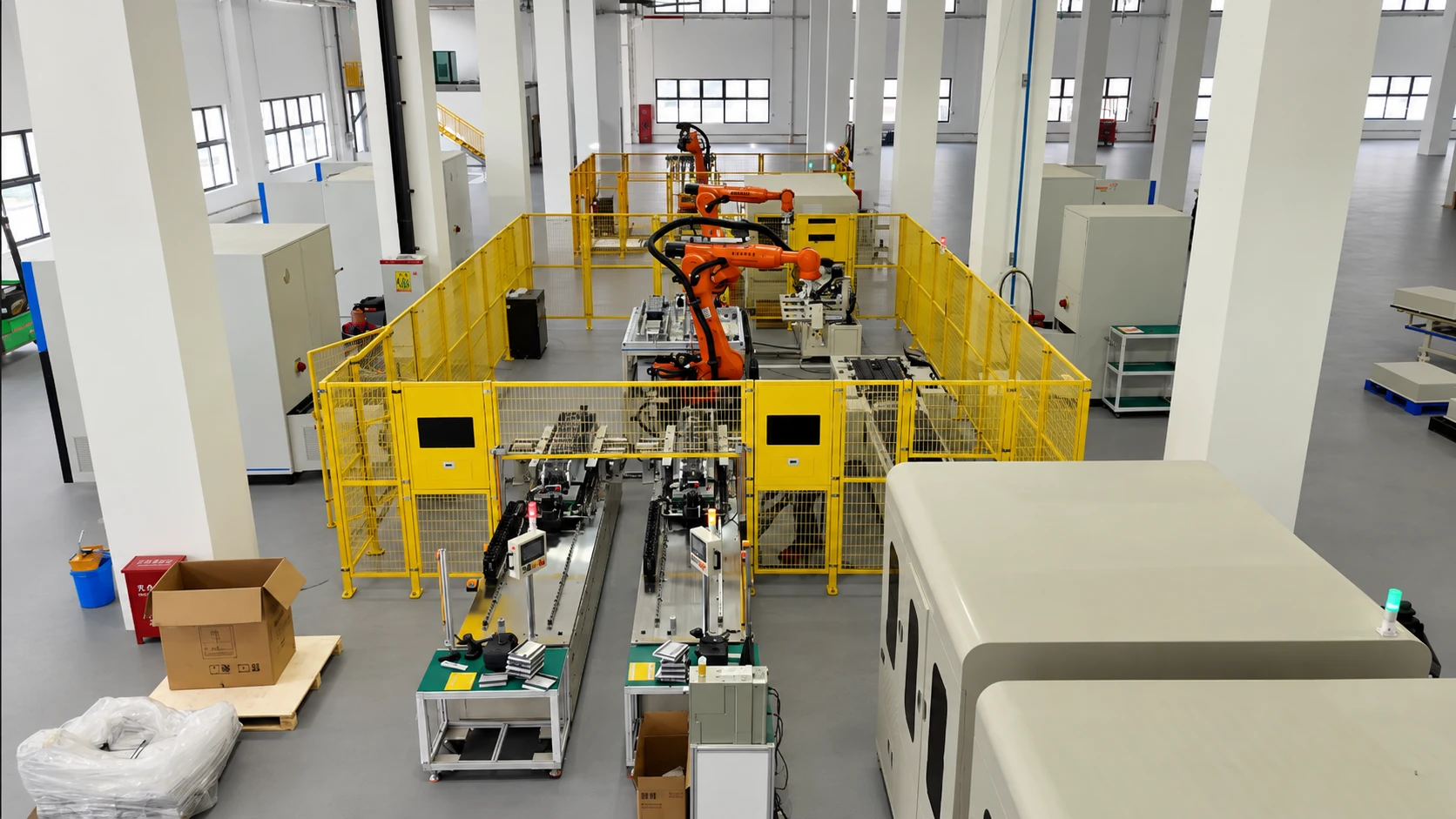
MES requirements should be considered during production line engineering rather than added only after the equipment has been installed.
| Planning Step | Engineering Requirement | Expected Output |
|---|---|---|
| 1. Define Traceability Scope | Determine the required tracking level | Traceability structure |
| 2. Establish Product Identification | Define barcode or QR code rules | Identification standard |
| 3. Define Critical Data | Identify process parameters and inspection results | Data collection list |
| 4. Plan Equipment Communication | Define PLC and equipment interfaces | Communication architecture |
| 5. Establish Data Relationships | Link product, material and process records | Product genealogy structure |
| 6. Define Quality Rules | Establish process completion and failure handling | Quality control rules |
| 7. Verify Data Integrity | Check accuracy and record completeness | Data validation results |
| 8. Plan System Integration | Define customer MES or central system interfaces | Integration specification |
Data ownership, storage, backup, user permissions and data retention should also be defined before implementation.
6. Common MES Integration Problems and How to Avoid Them
| Potential Problem | Consequence | Recommended Control |
|---|---|---|
| Inconsistent product IDs | Broken traceability relationships | Establish unified identification rules |
| Missed barcode scanning | Incomplete material records | Define mandatory scan points |
| Incorrect data mapping | Misleading production records | Validate interfaces and data fields |
| Offline equipment records | Missing or delayed data | Define local storage and synchronization rules |
| Unclear failure handling | Nonconforming products may continue downstream | Establish process interlocks and hold rules |
| Unclear system responsibility | Integration delays | Define supplier and customer responsibilities |
An MES system should be evaluated not only by its displayed functions, but also by whether the required records can be accurately retrieved and associated with the correct product.
7. Sunka Lead's MES and Production Traceability Capabilities
Sunka Lead develops lithium battery module and PACK manufacturing equipment with engineering capabilities covering PLC control, MES integration and production automation.
For applicable projects, the MES configuration can include data collection, product and material identification, production process control, traceability, dashboard monitoring and customized data interfaces.
| Engineering Area | Application |
|---|---|
| Barcode Identification | Identifying production materials and products |
| Data Collection | Collecting relevant equipment and process information |
| Process Management | Recording workstation operations and completion status |
| Product Traceability | Linking materials and production records |
| Production Visualization | Displaying production and process information |
| System Integration | Supporting customized customer data interfaces |
Sunka Lead's technical project documentation includes MES functions covering cell, module and PACK process management, barcode-based traceability and production data collection.
The final MES scope is determined by the customer's production process, information architecture and integration requirements.
Frequently Asked Questions
1. What is MES in BESS manufacturing?
MES is a Manufacturing Execution System that manages and records production activities, including work orders, material identification, process execution, inspection results and product traceability.
2. How does MES improve BESS manufacturing quality?
MES connects materials, production operations and inspection records. This improves process visibility, supports defect investigation and helps manufacturers identify potentially affected products.
3. Can MES track battery PACKs inside a BESS container?
Yes. A properly configured system can link the container ID with installed PACKs, material information, assembly records and relevant inspection results.
4. What is the difference between MES and PLC?
PLC controls equipment operations and machine-level automation. MES manages manufacturing execution information, production records and traceability. They can exchange data through defined communication interfaces.
5. Can MES connect with an existing factory management system?
Yes. Customized interfaces can support data exchange with customer MES, ERP or central production management systems. Interface scope should be agreed during engineering.
6. When should MES integration be planned?
MES requirements should be discussed during the initial production line design stage so that barcode locations, data collection points and equipment communication interfaces can be planned in advance.
Discuss Your BESS Manufacturing Automation Project
Planning a new BESS manufacturing facility or upgrading an existing battery pack production line?
Sunka Lead provides customized lithium battery manufacturing equipment and production line integration solutions, including PLC control, MES interfaces, process data collection and production traceability.
Contact Sunka Lead to discuss your BESS assembly process and manufacturing data requirements.
About Sunka Lead
Sunka Lead is the brand of Guangdong Songke Leading intelligent equipment Co., Ltd., a provider of lithium battery module and PACK production equipment and intelligent manufacturing solutions.
The company focuses on prismatic, cylindrical and pouch battery module and PACK production equipment and provides customized automated production line solutions for global battery and energy storage manufacturers.
Its solutions integrate technologies such as automated assembly, industrial robotics, machine vision, laser processing, AGV material handling, automated inspection and production data management.
Sunka Lead aims to help customers build more efficient, flexible and reliable lithium battery manufacturing systems.